With the following button you will be redirected to Google Translate:
to Google Translate
AT THE EDGE?
How Europe Should Respond to Nuclear Threats
01.06.2026 - 03.06.2026
Thema
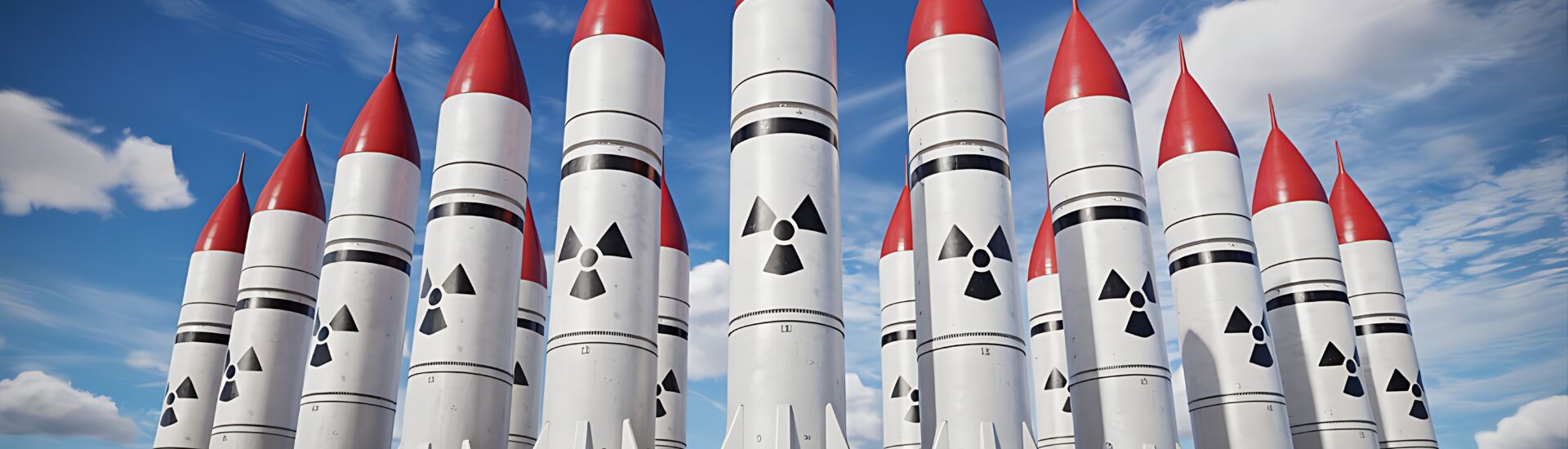
| Europe is confronted with a newly emerging nuclear order. With Russia’s ongoing nuclear saber-rattling, growing arsenals in China, and modernization of atomic weapons programs underway among larger and smaller nuclear powers, the danger of nuclear threats is once again at the forefront of everyone’s minds. Having lingered in the background since the end of the Cold War, nuclear weapons are once again at the centre of international relations, with Europe at the heart of this development. This comes at a time when the transatlantic relationship is cooling rapidly, which is also affecting the traditional US extended deterrence for Europe.
Therefore, calls for credible deterrence in Europe are growing louder, as are demands for increased efforts to reduce nuclear risk. At the same time, initiatives continue to work towards complete nuclear disarmament. So, what is the best way to address the growing nuclear threat in Europe? The Loccum Nuclear Conference is an established format dating back to the early 80s that brings together nuclear weapons experts, practitioners and activists from across Europe to assess and evaluate the current situation. The conference aims to provide a forum that fosters innovative policy ideas to reduce threats and risks, and to give the different constituencies in the field of nuclear policy a chance to exchange their varying perspectives in a productive atmosphere. The public workshop brings together actors from different walks of life who are all united by the fact that they are interested in the subject of the conference. However, this setting requires that we strictly follow the Chatham House rule – meaning that it is an off-camera/record and no personalized notetaking event. The working language is English. This is a draft program and may be subject to change.
|
Programm
zur DruckversionAnkit PANDA, Stanton Senior Fellow, Nuclear Policy Program, Carnegie Endowment for International Peace, Washington D.C.
INSIGHTS INTO THE SITUATION …
…FROM BEIJING
Jiang Tianjiao, Associate Professor at the Development Institute, Fudan University and Deputy Director at the Center for BRICS Studies, Visiting Scholar at Yale Law School, Shanghai (online)
… FROM WASHINGTON
Nicole Grajewski, Nonresident Scholar, Nuclear Policy Program, Carnegie Endowment for International Peace and Assistant Professor at the Centre de Recherches Internationales (CERI), Paris/Washington D.C.
…AND FROM MOSCOW
Andrey Baklitskiy, Senior Researcher, Weapons of Mass Destruction Programme, UNIDIR (United Nations Institute for Disarmament Research), Geneva
Mélanie ROSSELET, Senior Advisor, Policy Planning Division, French Ministry of Foreign Affairs, Associate Fellow at CIENS/ENS UIm and former Director of Strategic Analysis at CEA, Paris
Peter WATKINS, Visiting Professor, School of Security Studies at King’s College and Former Director General (2014-18) at the UK Ministry of Defence, London
* = invited
** = preliminary confirmed
Juliane HAUSCHULZ, Board Member, ICAN Germany (International Campaign to Abolish Nuclear Weapons) and IPPNW Germany (International Physicians for the Prevention of Nuclear War), Berlin
Hans KRISTENSEN, Director, Nuclear Information Project, Federation of American Scientists, Washington D.C.
Paul VAN HOOFT, Research Leader, Defence and Security, RAND Europe, The Hague (online)
Tarja CRONBERG, Distinguished Associate Fellow, SIPRI, Stockholm International Peace Research Institute, Solna
Oliver MEIER, Head of Programme on Nuclear and Multilateral Disarmament, European Leadership Network, Berlin/London
Moderation: Linda OSTERMANN, Research Associate, Human Technology Center (HumTec) at RWTH Aachen University
Eleni EKMEKTSIOGLOU, Policy Fellow, on Risk Reduction, Emerging Technologies and Nuclear Strategy, BASIC (British American Security Information Council), London/Paris
Tristan VOLPE, Senior Researcher, Arms Control and Emerging Technologies Project, Institute for Peace Research and Security Policy at the University of Hamburg (IFSH), and Associate Professor at the Naval Postgraduate School, Monterey/Berlin
Moderation: Thomas MÜLLER-FÄRBER, Protestant Academy Loccum
Ulrich KÜHN, Head, “Arms Control and Emerging Technologies”, Institute for Peace Research and Security Policy at the University of Hamburg (IFSH), Hamburg
Polina SINOVETS, Head of the Odessa Center for Non-Proliferation (OdCNP) and Associate Professor at the Department of International Relations, Odessa
Moderation: Thomas MÜLLER-FÄRBER, Protestant Academy Loccum
Jana BALDUS, Policy Fellow at the European Leadership Network (ELN) and Associated Researcher, Peace Research Institute Frankfurt (PRIF), London
Jean-Marie COLLIN, Associate Researcher in the Group for Research and Information on Peace and Security (GRIP) and Spokesman of ICAN France, Paris
Moderation: Davis ELLISON, Strategic Analyst and Chair of the Initiative on the Future of Transatlantic Relations, The Hague Center for Strategic Studies (HCSS), The Hague
In this interactive part, we will break up into small groups in a mini open space-like setting to discuss innovative, out-of-the-box topics related to the future of nuclear policy.
Stephan KLEMENT, Special Envoy Non-Proliferation and Disarmament, Special Adviser on Iran Nuclear Issues, EEAS, Brussels
Azadeh ZAMIRIRAD, Head, Africa & Middle East Research Division, German Institute for International and Security Affairs (SWP), Berlin
* = invited
** = preliminary confirmed
Héloïse FAYET, Research Fellow and Head, Deterrence & Proliferation Research Program, Institut Français des Relations Internationales, Paris
Oliver THRÄNERT, Non-Resident Senior Fellow, Research Division, International Security, German Institute for International and Security Policy (SWP), Berlin
Moderation: Lucian BUMEDER, Researcher, Arms Control and Emerging Technologies Research Group, Institute for Peace Research and Security Policy at the University of Hamburg (IFSH), Hamburg
Astrid KAUSE, Junior Professor of Sustainability Science and Psychology, University Leuphana, Lüneburg
Michal ONDERCO, Professor of International Relations in the Department of Public Administration and Sociology at Erasmus University Rotterdam
Moderation: Thomas MÜLLER-FÄRBER, Protestant Academy Loccum
Nassima BARROWS, Acting Director of Nuclear Policy at NATO, Brussels
Giorgio FRANCESCHINI, Nuclear Expert, Division OR09 (Nuclear Arms Control, Non-Proliferation and Disarmament), German Foreign Office, Berlin
Thomas HAJNOCZI, Advisor to Mayors for Peace, Board Member of BASIC and Former Director for Disarmament, Arms Control and Non-Proliferation at the Austrian Foreign Office, Vienna
Krzysztof WĄSOWSKI, Department of Strategy, Ministry of Foreign Affairs Republic of Poland, Warsaw
* = invited
** = preliminary confirmed
Tagungsleitung
- Dr. Thomas Müller-Färber
- Telefon: 05766 81-109
- E-Mail: thomas.mueller-faerber@evlka.de
- Tagungsassistenz
- Cornelia Müller
- Telefon: 05766 81-114
- E-Mail: cornelia.mueller@evlka.de
Tagungsgebühren
Regulär265€
Ermäßigt
185€
weitere Informationen